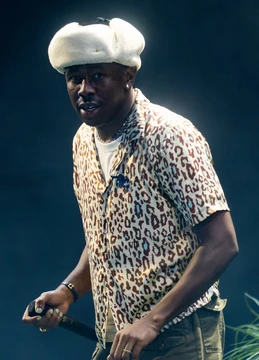
Odd Future
The misfit collective that became the beating heart of a new West Coast sound.

Odd Future is the creative collective, label, and cultural brand founded by Tyler, the Creator in Los Angeles in the late 2000s. What began as a loose punk-rap circle of misfit artists grew into the engine room behind Tyler's earliest mixtapes, his debut album, and a generation of West Coast sound. In the context of his discography, Odd Future is less a single record and more the soil from which his first body of work grew—the identity, aesthetic, and community that shaped everything from Bastard to Flower Boy.
Over the years the collective's identity shifted dramatically, moving from a deliberately provocative, confrontational brand to a more curated creative house, and eventually receding as Tyler's solo artistry (culminating in Chromakopia) moved beyond its early framework. For fans, Odd Future remains the origin story: the place where a troubled teenager's rage, humor, and vulnerability first found an audience.
- Type
- Creative collective / record label / cultural brand
- Founder
- Tyler, the Creator
- Base
- Los Angeles, California
- Era
- Late 2000s onward
- Notable early members
- Tyler, Earl Sweatshirt, Syd, Hodgy Beats, Ab-Soul
- Early releases
- Bastard, Bastard 2
- Status
- Evolved; brand identity shifted significantly by the mid-2010s
Lore & Background
Odd Future was born from Tyler's need to surround himself with people who shared his particular brand of alienation. In the late 2000s Los Angeles, a group of young artists—many still teenagers—coalesced around a shared aesthetic that mixed punk energy, hip-hop cadence, and an almost theatrical commitment to being 'weird.' The name itself, a self-aware nod to feeling out of step with the world, became a rallying cry for a community that was as much about belonging as it was about rebellion.
The collective's early output, particularly the Bastard mixtapes, was raw, confrontational, and unapologetically provocative. Tyler and his peers leaned into shock value, dark humor, and aggressive delivery, building a cult following that was as fascinated by the controversy as by the music. The punk-rap fusion, the DIY energy, and the sense that these kids were making art in a garage rather than a studio gave the project an authenticity that resonated deeply with a generation of listeners who felt excluded from the mainstream hip-hop landscape.
As the years passed, the collective matured alongside its members. The confrontational edge softened, the sound grew more melodic and introspective, and the brand's public face shifted from a deliberately abrasive identity to something more inclusive and artistically ambitious. By the time Tyler's later albums arrived, Odd Future had become less a label of a specific sound and more a legacy—a foundational chapter in the story of how a group of misfits helped reshape what West Coast hip-hop could be.
In Their Own Story
The garage smelled like cheap energy drinks and fresh spray paint. Tyler sat cross-legged on a mattress, headphones around his neck, watching Earl freestyle into a cracked phone mic while Hodgy beatboxed a rhythm that sounded like a broken vending machine. Syd was in the corner, sketching lyrics on the back of a pizza box, her pen moving fast enough to tear the paper. Someone's phone rang with a ringtone that was just a distorted laugh. Tyler pulled the headphones back on, hit record on a battered laptop, and let the noise flood in—every cough, every foot-stomp, every half-finished joke. He didn't fix it. He never fixed it. That was the point. The mess was the music, and the music was the only place none of them felt like they were performing. Outside, the Los Angeles sun was already going down, painting the strip mall parking lot in shades of tangerine and rust. Inside, the four of them kept going, because stopping meant going back to being just kids in a city that didn't want them. So they made something odd, something future, something that didn't fit any box. And that was enough.
Reader's Guide
Odd Future is the foundational chapter of Tyler's artistic arc—the period where raw, confrontational energy met a community of like-minded misfits. The creative context is Los Angeles in the late 2000s: a teenager with a laptop, a group of friends, and a sound that fused punk aggression with hip-hop flow. The thematic throughline is identity under pressure—feeling wrong in a world that demands you be something else.
Standout early work includes the Bastard mixtapes, where Tyler's delivery is deliberately abrasive, the production lo-fi and chaotic, and the subject matter unflinching. The production choices here are intentional: minimal beats, distorted vocals, a sense of urgency that mirrors the emotional state of the material. These releases were received with equal parts shock and admiration, building a cult following that would carry Tyler into the mainstream.
As the collective evolved, so did the sound. The punk edge gave way to more melodic structures, the confrontational lyrics softened into vulnerability, and the community became a launchpad rather than a cage. By the time Tyler reached the Flower Boy and Chromakopia eras, Odd Future was less a living label and more a formative memory—the chapter where he learned that being weird was not a flaw but a frequency. The arc from OF's garage-rage to Chromakopia's lush, cinematic world is the story of an artist outgrowing the identity that first made him visible, while never quite severing the roots that gave him voice.
Did You Know?
- Odd Future's early aesthetic deliberately blended punk-rock energy with hip-hop, a fusion that was unusual for West Coast music in the late 2000s and helped distinguish the collective from the prevailing G-funk and trap
- Several members of the collective were still teenagers when the earliest mixtapes were recorded, making Odd Future one of the few major hip-hop collectives to emerge almost entirely from adolescent creators.
- The collective's name and early branding were intentionally provocative, designed to signal that its members saw themselves as outsiders—a self-aware positioning that became central to Tyler's public identity for years.
- The transition from the Odd Future era to later projects like Chromakopia represents one of the most dramatic reinventions in modern hip-hop, moving from confrontational lo-fi to lush, orchestral production while retaini
More in Albums & Discography
Elsewhere in the Tyler the Creator universe
Spotted an error? Know more?
This is a living reference — every entry is fact-audited, and reader corrections feed straight into our audit queue. Suggest an edit · See this site's audit record