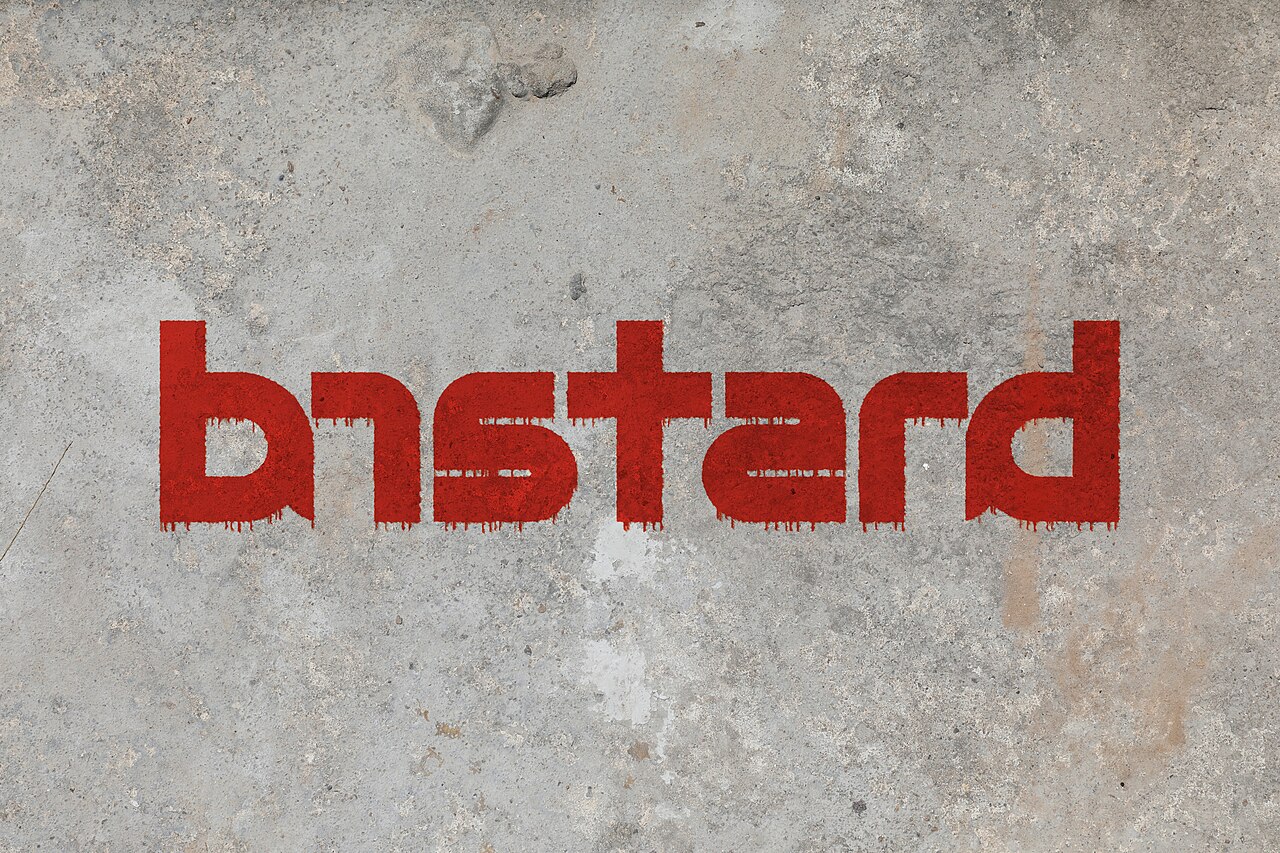
Bastard (2009)
A teenager in a Ladera Heights bedroom, a laptop, and the unapologetic birth of a sound.

Der Barbar · CC BY 4.0
Bastard is Tyler, the Creator's self-released debut album, recorded in his bedroom in Ladera Heights, California, and dropped in 2009 on his own imprint, Odd Future. It is the raw, confrontational origin document of Tyler's artistic identity: a teenager rapping over self-produced, lo-fi beats with an energy that is equal parts rage, dark comedy, and unfiltered self-expression. The album functions as the bedrock of the Odd Future collective's early mythology and the first full-length statement of the persona that would later evolve into the more refined, genre-blending artist of later projects. For fans, Bastard occupies a sacred, almost mythic position. It is the sound of a kid in a Southern California bedroom deciding he would not wait for permission, for polish, or for an industry to validate him. Its aggression is not calculated; it is the sound of someone who is still figuring out who he is while simultaneously daring the world to look away.
- Recording location
- Ladera Heights, California
Lore & Background
Bastard was born out of pure necessity and defiance. Tyler, barely a teenager, had already been making beats and rapping in the Ladera Heights scene, and the album was recorded in his own bedroom with minimal equipment. There was no label deal, no A&R, no studio budget. What there was was a laptop, a microphone, and a relentless drive to put his voice into the world on his own terms. The result is an album that sounds like it was made in a single feverish stretch of time, which is precisely the point. The imperfections are not flaws to be smoothed over; they are the texture of authenticity. Musically, Bastard is a collision of aggressive hip-hop delivery over sample-heavy, lo-fi instrumentals that Tyler assembled himself. The beats are choppy, loop-driven, and often deliberately rough around the edges. Tyler's flow is fast, percussive, and laced with a dark, sardonic humor that would become a signature of his voice. The lyrical content is confrontational, self-mythologizing, and unflinching in its aggression, though threaded with moments of vulnerability that hint at the emotional complexity to come in later projects. The album does not pretend to be polished; it presents itself as a declaration, a middle finger to the idea that a young Black kid from Ladera Heights needed a gatekeeper's approval to make art. In the broader Odd Future mythology, Bastard is the Genesis. It is the album that the collective's early identity was built around, the sound that drew in the first circle of collaborators and fans who would become part of the OFWGKTA orbit. It established the rules of Tyler's world: no filter, no apology, no waiting. Everything that followed, from the more melodic and emotionally open work of later years, traces its DNA back to this first, rough, unapologetic statement.
In Their Own Story
The bedroom is small. The walls are bare except for a poster that's peeling at the corners. A laptop hums on the desk, its screen casting a blue glow over a tangle of cables. The air smells like stale energy drinks and the particular dust that settles in a room that hasn't been opened up in days. Tyler is hunched over the keyboard, dragging a loop back and forth, chopping a sample until it sounds like something that doesn't exist yet. He hits record. He speaks into the mic, and the words come out fast, sharp, a little too loud, a little too personal. He doesn't stop. He doesn't edit. He lets the track run until the silence after the last bar feels like the right place to end. He saves the file. He doesn't name it. He doesn't need to. He already knows what it is.
Reader's Guide
Bastard is the sound of a rule being broken before the rule was fully understood. Tyler, a teenager in Compton, recorded the entire album in his bedroom, producing the beats himself on a laptop with no external studio support. The creative thesis is simple and radical: you do not need permission, polish, or a team to make something that matters. The production is lo-fi, sample-driven, and intentionally rough, with choppy loops and a sense of urgency that mirrors the delivery. Key tracks like the title track "Bastard," "Pork & Beans," and "Goblin" establish the album's core identity: aggressive, darkly comic, and unapologetically confrontational. Tyler's flow is rapid and percussive, treating the mic almost as a drum instrument. The visual identity of Bastard is deliberately anti-polished: raw, DIY, and rooted in the bedroom-hip-hop aesthetic. The album's cover and associated imagery lean into a gritty, unglamorous look that rejects the sleek production values of mainstream hip-hop. Thematically, the album is a self-mythologizing act, a young artist constructing his own legend in real time, daring the listener to decide whether to be repelled or drawn in. Critically and among fans, Bastard is regarded as the essential origin point of Tyler's career and the Odd Future collective. It shifted Tyler's trajectory by establishing a template of self-reliance and artistic independence that he would carry forward, even as his sound grew more melodic, collaborative, and emotionally complex. The album's rawness is its strength and its limitation, and that tension is exactly what makes it endure.
Did You Know?
- Bastard was recorded entirely in Tyler's bedroom in Ladera Heights, California, with no external studio involvement, making it a true DIY production.
- Tyler produced the majority of the album's beats himself, handling the instrumental work alongside his vocal performance.
Origins, Production, and the Therapy Framework
Bastard took shape over a two-year span, with Tyler writing and recording material between 2007 and 2009. The project originally carried the working title Dinosaur and was slated for a March 2009 arrival, though it ultimately landed on Christmas Day 2009 through Odd Future's own website. Tyler handled the bulk of production himself, cycling through GarageBand, Logic Pro, Reason Studios, and FL Studio to build the album's sonic palette. In a 2019 reflection, he cited a wide range of 2009-era releases as creative touchstones, naming Eminem's Relapse, James Pants' Seven Seals, Nite Jewel's Good Evening, and Grizzly Bear's Veckatimest, alongside Clipse's 2006 record Hell Hath No Fury and the work of the Cool Kids. Structurally, the album is framed as a therapeutic dialogue: Tyler speaks throughout with a character called Dr. TC, described as both therapist and guidance counselor. The title track plants the seed that this record is the first of three planned therapy sessions, giving the project a narrative arc well beyond a standard hip-hop LP.
Critical Acclaim and Enduring Legacy
Upon its arrival, Bastard earned strong praise from the music press. Pitchfork dubbed it a minor masterpiece of shock art and highlighted the thrilling tension between its comedic and vitriolic lyricism, while RapReviews commended the inventive production and Tyler's flow but flagged the frequent rape references as a significant liability. The album's critical standing has only deepened over time. It landed at number 32 on Pitchfork's Top 50 Albums of 2010, and the single French! placed 61st on their Top 100 Tracks of 2010. Rolling Stone included it at number 118 on their 2022 list of the 200 Greatest Hip-Hop Albums of All Time, and Complex ranked it 38th among the 50 Best Rapper Mixtapes in 2018. It also secured a spot on Pitchfork's 100 Greatest Hip-Hop Albums of All Time. Four singles—Pigs Fly, Jack and the Beanstalk, Seven, and VCR—supported the release, with official music videos produced for VCR, the title track, and French!
The UK Ban and Ongoing Feuds
Bastard's provocative content drew far more than critical attention. Alongside Tyler's follow-up album Goblin, it provoked a backlash from members of the UK Conservative Party. Home Secretary Theresa May responded by barring Tyler from entering Britain for a period of three to five years. The decision ignited widespread outrage and resurfaced publicly when May later became Prime Minister. Tyler and his fanbase widely interpreted the ban as racially motivated; he described feeling treated like a terrorist and suggested the animus stemmed from discomfort over Black men being idolized by young people. The restriction was finally lifted in May 2019. Domestically, the album also fueled a bitter dispute with hip-hop blogs 2DopeBoyz, NahRight, and others. Tyler opened the title track by cursing them directly, and continued to take aim at them on later records. In February 2011, 2DopeBoyz founders Joel Zela and Meka Udoh pushed back, stating they had never received music from Tyler or Odd Future, were unaware of him until his public attacks, and labeled his grievances a marketing stunt.
The Odd Future Collective and the Album's Afterlife
Bastard served as a showcase for the young Odd Future collective, with guest verses from Casey Veggies, Hodgy Beats, Syd the Kyd, Domo Genesis, Earl Sweatshirt, Brandun DeShay, Mike G, Jasper Dolphin, and Taco. Two tracks, Odd Toddlers and Slow It Down, had already appeared on the 2008 Odd Future Tape, while Jack and the Beanstalk circulated earlier on Hypetrack's Hype Club mixtape under a different title. The album's afterlife included a notable revision: on December 25, 2010, a re-release swapped Brandun DeShay's verse on Session for one from Mike G following a falling-out between the two. The project was hosted on Odd Future's online store before being pulled, and by 2012 the site carried a version crediting both artists on that track. Tyler later announced intentions to issue a remastered physical edition through Odd Future Records, but that release never materialized. Additional uncredited vocals from Earl Sweatshirt on VCR and Hodgy Beats on Inglorious further underscore the album's collaborative DNA.
Gallery
Frequently Asked Questions
What is Bastard (2009)?
Bastard is Tyler, the Creator's debut full-length album, a confrontational and lo-fi collection of tracks that marked his first major public release. It was recorded in 2009 in his bedroom in Compton, California.
Who produced Bastard (2009)?
Tyler produced the album himself, building the beats on a laptop in his home setup. That hands-on, DIY process is a core part of the record's rough, unpolished character.
What label put out Bastard?
The project was self-released under Tyler's own imprint, Odd Future, in 2009. It stands as one of the earliest artifacts of the collective's independent, self-directed ethos.
Why does Bastard matter in Tyler's career?
It established the unfiltered persona—equal parts rage and dark comedy—that defined his early public image and seeded Odd Future's mythology. Later, more genre-blending albums grew out of the raw foundation this record laid.
Where was Bastard recorded?
Tyler tracked the entire album in his bedroom in Compton, California. That single-room, laptop-based setup is a big reason the project carries such an immediate, in-your-face energy.
More in Albums & Discography
Elsewhere in the Tyler the Creator universe
Spotted an error? Know more?
This is a living reference — every entry is fact-audited, and reader corrections feed straight into our audit queue. Suggest an edit · See this site's audit record