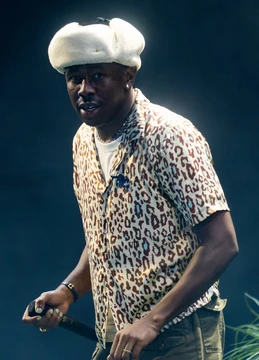
Goblin
The raw, unapologetic 2011 project that made Tyler the Creator impossible to ignore.

Goblin is the second major project from Tyler, the Creator, self-released through his own imprint Odd Future Records in the spring of 2011. It arrived as a raw, confrontational statement from a 19-year-old who had already made a name for himself with the 2009 mixtape Bastard, and it cemented his reputation as an artist who refused to soften his voice for commercial comfort. For the Odd Future collective and the broader hip-hop landscape, Goblin marked the moment a small Los Angeles crew's most polarizing member became impossible to ignore.
In the Tyler the Creator timeline, Goblin sits in the valley between the chaotic, internet-born energy of his earliest work and the more polished, genre-bending records that would follow. Fans often describe it as the album that made them either fall in love with his unfiltered honesty or walk away entirely—and that split, in many ways, defined the community that would grow around him for the next decade.
- Artist
- Tyler, the Creator
- Release year
- 2011
- Label
- Odd Future Records
- Role in discography
- Second major project
- Genre
- Hip-hop / Experimental / Alternative
- Cultural context
- Odd Future collective formation era
- Notable for
- Unfiltered explicit content and confrontational tone
Lore & Background
Goblin was born out of Tyler's frustration with the expectations placed on him after Bastard made him a minor internet sensation. Rather than smoothing his edges, he leaned harder into aggression, dark humor, and unflinching subject matter. The record's production blends lo-fi beats, ambient textures, and sharp rhythmic pockets that feel closer to experimental hip-hop than the polished West Coast sound dominating radio at the time. Every track carries the weight of a young man processing anger, identity, and creative control on his own terms, without a major-label safety net.
The album's cultural footprint extends far beyond its audio. It became a touchstone for a generation of listeners who felt alienated by both mainstream rap and the indie-hip-hop scene. Odd Future's fanbase—often called the Odd Future Army—coalesced around Goblin as a shared cultural artifact, a record that felt like a secret handshake. The controversy it generated, both online and in music press, paradoxically amplified Tyler's reach and gave the collective a mythology of outsiders who refused to be categorized.
Looking back, Goblin functions as the emotional and artistic baseline from which Tyler's later evolution is measured. Listeners who grew up with it often describe a bittersweet relationship: pride in the rawness, but also an awareness of the immaturity and pain that fueled it. It is, in the fan community's collective memory, the record Tyler had to make before he could become who he would eventually become.
In Their Own Story
The studio was a converted garage in the Hollywood Hills, smelling of stale coffee and ozone from a blown speaker. Tyler sat cross-legged on the concrete floor, headphones around his neck, muttering into a mic that was probably too close for comfort. Outside, the LA sun was doing that late-afternoon thing where everything turns the color of rust. He'd been working on the same eight bars for three hours, tearing them up, recording them again. His phone buzzed with a text from a friend in the group: *you good, man?* He typed back two words and went silent. The beat underneath was sparse, almost skeletal, a kick drum and a hi-hat pattern that sounded like a heartbeat skipping. He leaned into the mic one more time, and whatever came out next was the truest thing he'd ever recorded. The garage felt smaller after that, like the walls had crept closer. He pulled the headphones off, stared at the ceiling, and let the silence do its work.
Reader's Guide
Goblin dropped in May 2011, and the internet lost its collective mind. Tyler had already made waves with Bastard, but this was different—this was him standing in front of a microphone with zero filter and zero apologies. The explicit language, the dark subject matter, the confrontational tone: it was a middle finger to anyone who thought he'd mellow out because he'd found an audience. Fans who'd followed him through the early Odd Future days felt like they were witnessing something genuinely new, a young artist refusing to be packaged.
What made the moment land so hard was the context. Tyler was 19, self-releasing on a label he'd built in a garage, and the hip-hop world was still largely gatekept by major imprints. Goblin said: I don't need your permission. The controversy that followed—press coverage, online debates, the inevitable calls for him to be "responsible"—only fed the fire. For the Odd Future community, it became a rite of passage. You either embraced the chaos or you weren't part of it.
Looking back, the shift mattered because it locked in Tyler's creative identity. Every record after Goblin, no matter how polished or genre-fluid, still carries that core: the willingness to be ugly, to be angry, to be uncommercial. Goblin is the seed. Fans who were teenagers in 2011 and are in their twenties now still reference it the way you'd reference a first love—complicated, formative, and a little embarrassing in the best way.
Did You Know?
- Goblin was self-released through Odd Future Records, meaning Tyler controlled distribution, marketing, and creative direction without a major-label intermediary.
- The album's release coincided with the early formation of the Odd Future collective, and it became a foundational cultural artifact for the group's fan community.
- Tyler was 19 years old when Goblin was released, making it one of the most raw and unfiltered projects to come out of the early-2010s hip-hop scene.
- The album's confrontational tone and explicit content generated significant press controversy, which paradoxically expanded Tyler's audience far beyond the underground hip-hop community.
More in Story & Timeline
Elsewhere in the Tyler the Creator universe
Spotted an error? Know more?
This is a living reference — every entry is fact-audited, and reader corrections feed straight into our audit queue. Suggest an edit · See this site's audit record