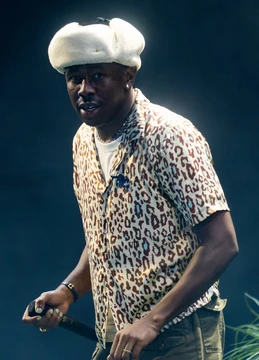
Flower Boy
The album where the thorns finally bloom into something soft enough to hold.

Flower Boy is the fifth studio album by Tyler, the Creator, released in the spring of 2017. It stands as the most dramatic tonal pivot in his discography: where his earlier work leaned into horror, aggression, and dark humor, Flower Boy opens the door to vulnerability, tenderness, and a lush jazz-inflected soundscape. The album functions as both a personal coming-of-age statement and a cultural reset, inviting listeners to sit with softness rather than flinch from it.
Within the broader Tyler the Creator narrative arc, Flower Boy occupies the 'bloom' chapter—the moment the thorny, blood-soaked Goblin era finally yields to color, warmth, and self-acceptance. It reframes his entire artistic identity for the next decade, establishing that the loudest statement he can make is a quiet one.
- Type
- Fifth studio album
- Release year
- 2017
- Label
- Columbia Records
- Sonic palette
- Jazz, lo-fi R&B, neo-soul, hip-hop
- Notable collaborators
- Frank Ocean, Kendrick Lamar, SZA, Daniel Caesar, Sampha, H.E.R., Ty Dolla $ign
- Cultural role
- Marks Tyler's definitive shift from aggression to vulnerability
Lore & Background
The world of Flower Boy is one of pastel light filtering through sheer curtains, of jazz drums brushed rather than hit, of a young man who spent years building a fortress of rage and finally sets the bricks down. The visual language is saturated with florals, warm golds, and powdery pinks—a deliberate rejection of the black leather, blood splatter, and horror iconography that defined the Goblin and Cherry Bomb eras. Every frame feels like a memory you'd find tucked in a coat pocket: slightly faded, golden-lit, tender.
Musically, the album breathes. Where earlier records were built on staccato beats and shouted hooks, Flower Boy stretches into long, unhurried passages where a saxophone can wander for eight bars before the vocal returns. The production favors tape warmth, brushed percussion, and Rhodes keys, creating a soundscape that feels like a late-night conversation in a dimly lit kitchen. Guest appearances are not drop-ins; they feel like friends who wandered in, sat on the couch, and added a line to the story.
Thematically, the album circles questions of identity, desire, and the permission to be soft. Tyler, who had for years coded his sexuality and vulnerability behind layers of irony and aggression, uses the record to say, plainly, that he is allowed to want tenderness. The 'flower boy' is not a weakness; it is a reclamation. Fans experienced this as a collective exhale—a signal that the person behind the mask could finally be seen without armor, and that the audience was invited to lower their guard alongside him.
In Their Own Story
The kitchen is warm. Not hot—warm. The kind of warmth that means someone left the oven on an hour ago and the whole apartment smells like cinnamon and something almost sweet. He's sitting cross-legged on the tile floor, back against the counter, a glass of iced tea sweating in his palm. The radio is playing something with a brushed snare and a Rhodes chord that keeps resolving into the next one, never quite landing. He hums along, not because he's performing, but because the melody found him and he didn't have the energy to argue. Outside, the late-afternoon light is turning the walls the color of peach flesh. He watches a single petal—maybe from the bouquet on the windowsill—drift down and land on the tile. He doesn't brush it away. For the first time in a long time, the silence in the room isn't something to fill. It's something to sit inside.
Reader's Guide
There's a moment every Tyler fan remembers—the exact second the Goblin mask cracked. For years, the narrative was all teeth: horror covers, aggressive delivery, a whole aesthetic built around the idea that vulnerability was a weakness to be mocked. Then the spring of 2017 arrived, and suddenly the palette shifted. Pastel. Floral. Brushed drums instead of 808s. The first listen felt almost disorienting, like walking into a room where the lights had been turned down and someone had put on a soft jazz record without asking.
What made it land wasn't just the sound. It was the honesty. Tyler had spent a decade building a persona that could absorb any hit, deflect any question, bury any feeling under a layer of irony. Flower Boy said: no more. The tracks about longing, about wanting to be held, about the specific ache of being seen—those hit differently because you could hear the armor coming off in real time. Fans who'd followed the Odd Future story since the early days felt like they were watching a friend finally let someone hold their hand in public.
The cultural ripple was immediate. The visual identity—soft fabrics, floral prints, warm color grading—became a whole aesthetic language that fans adopted, that fashion picked up, that a generation of listeners who'd been told to be hard and loud suddenly felt permission to be soft. It wasn't just an album drop. It was a door opening, and a lot of people walked through it together.
Did You Know?
- Flower Boy was conceived as a direct antithesis to the 2011 Goblin era; Tyler has described it as the album where he finally allowed himself to be the person he was, rather than the character he'd built as a shield.
- The album's visual identity—pastel tones, floral motifs, warm lighting—was so distinct from his earlier horror aesthetic that it effectively created a new visual language in hip-hop culture, influencing fashion, photogra
- The guest roster reads like a love letter to the broader R&B and neo-soul community, with artists like Frank Ocean, Sampha, and Daniel Caesar contributing in ways that feel more like collaborative jam sessions than tradi
- Tyler has spoken in interviews about how the album's themes of desire and self-acceptance were personally difficult to write, representing a period where he was actively working through his own relationship with vulnerab
More in Story & Timeline
Elsewhere in the Tyler the Creator universe
Spotted an error? Know more?
This is a living reference — every entry is fact-audited, and reader corrections feed straight into our audit queue. Suggest an edit · See this site's audit record