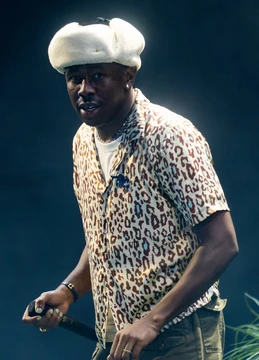
Flower Boy Era
The era Tyler traded thorns for petals and let the world see the bruised heart underneath.

The Flower Boy Era refers to the period surrounding Tyler the Creator's third studio album, *Flower Boy*, released in 2017. It marked one of the most dramatic creative pivots in Tyler's career: a deliberate move away from the confrontational, explicitly violent aesthetics of *Goblin* and *Bastard* toward a warmer, more melodic, and emotionally vulnerable sound. The era is defined not just by the album itself but by a full sensory package—pastel color palettes, floral iconography, softer fashion through Golf Wang, and a public persona that leaned into tenderness and self-reflection.
For fans who followed Tyler from the Odd Future days, Flower Boy felt like watching a friend finally set down the armor they'd been wearing for years. The era redefined what Tyler could be as an artist and set the tonal groundwork for everything that followed, including *IGOR* and the broader Tyler the Creator universe of color-coded albums and evolving identity.
- Album
- Flower Boy (2017)
- Notable collaborators
- Frank Ocean, SZA, Playboi Carti
- Aesthetic shift
- Pastel palette, floral motif, softer visual identity
- Fashion presence
- Golf Wang (Tyler's streetwear label)
- Tonal direction
- Melodic, pop-influenced, emotionally vulnerable
- Career context
- Third studio album; major departure from earlier work
Lore & Background
Before Flower Boy, Tyler the Creator was largely defined by shock, aggression, and the chaotic energy of Odd Future. His earlier projects carried weighty themes of trauma and anger, often wrapped in deliberately abrasive production and confrontational visuals. The Flower Boy era shattered that template. The album leans into lush, layered production—synth pads, warm bass, and vocal melodies that float rather than punch. Tyler's songwriting became more introspective, dealing with loneliness, self-doubt, and a desire for gentleness in a world that had rewarded his harder edges.
The visual and cultural packaging was just as important as the music. The flower became Tyler's personal sigil during this stretch, appearing on merchandise, social media, and stage design. Golf Wang's collections leaned into soft fabrics, pastel tones, and floral embroidery—a stark contrast to the distressed, punk-adjacent looks of earlier tours. Tyler's public interviews and social media presence during this window were noticeably more open, discussing mental health, vulnerability, and the difficulty of growing past a persona the public had locked in.
Critically and commercially, Flower Boy was a turning point. It proved Tyler could be a mainstream pop-culture figure without abandoning his identity, and it opened the door for the even more experimental and color-coded *IGOR* era. For the fanbase, it was the moment Tyler stopped performing anger and started performing healing—and that shift resonated deeply with listeners who saw their own struggles mirrored in his willingness to be soft.
In Their Own Story
The studio lights are warm, almost golden, and the room smells faintly of something floral—maybe a candle on the mixing desk, maybe just the memory of a garden Tyler walked through that morning. He's sitting cross-legged on a couch, headphones around his neck, listening to a vocal take for the ninth time. The track is soft, almost whispered, and he keeps wincing not at the performance but at the honesty of it. "That's too much," he mutters, then laughs, then plays it again. Outside the glass, the crew is quiet. No one's checking their phone. The beat underneath is a wash of keys and a low, breathing bass, and somewhere in the mix a vocal chop hums like a half-remembered lullaby. Tyler pulls his knees up, rests his chin on them, and hums a melody that isn't on the track yet. The flower on the wall—painted, slightly crooked—catches the light. He doesn't look at it. He doesn't need to. It's already in the song.
Reader's Guide
Think of Flower Boy as the exhale. After years of Tyler performing a character—loud, confrontational, deliberately provocative—the Flower Boy era is where he finally let the character dissolve and let the person underneath breathe. What changed wasn't just the music; it was the entire language around it. The colors softened. The fashion got gentler. The lyrics stopped swinging and started reaching.
Why it mattered to Tyler's trajectory: it proved he could be vulnerable without being fragile, melodic without being safe. It gave him permission to keep evolving, which is exactly what happened with IGOR and beyond. Without Flower Boy, the later, weirder, more experimental Tyler might not have had the runway to exist.
How fans experienced it: if you were in the Odd Future crowd, it hit like a plot twist. The kid who used to scream into the mic was now singing about feeling small, about wanting someone to just *be* near you. The pastel merch sold out. The flower became a badge. People who'd never listened to Goblin suddenly found themselves crying in a car to a track about boredom and longing. It was the era where Tyler stopped being a shock act and became, for a lot of people, a friend you could finally talk to about the stuff that actually hurts.
Did You Know?
- The Flower Boy aesthetic—pastel tones, floral imagery, softer fashion—was a deliberate visual counterpoint to the dark, aggressive branding of Tyler's earlier Odd Future era.
- Frank Ocean's vocal contribution to the track 'See You Again' became one of the most widely shared and emotionally resonant moments of the era, often cited by fans as the album's emotional peak.
- Tyler's Golf Wang label expanded significantly during this period, with collections emphasizing soft fabrics, pastel colorways, and floral embroidery that mirrored the album's visual identity.
- The Flower Boy era is widely regarded by fans and critics as the bridge between Tyler's earlier confrontational work and the more experimental, color-coded *IGOR* era that followed.
More in Story & Timeline
Elsewhere in the Tyler the Creator universe
Spotted an error? Know more?
This is a living reference — every entry is fact-audited, and reader corrections feed straight into our audit queue. Suggest an edit · See this site's audit record